Hi all,
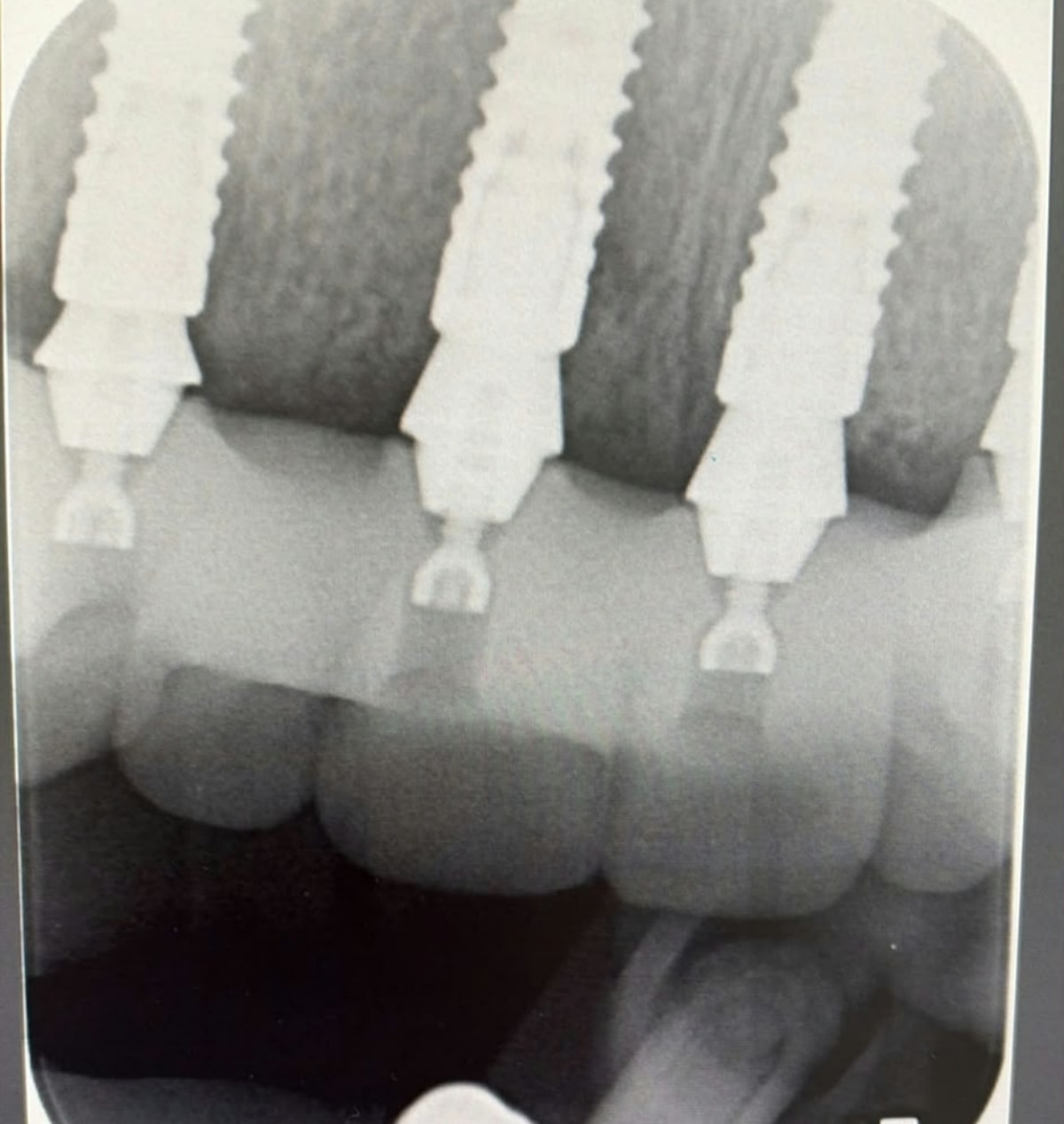
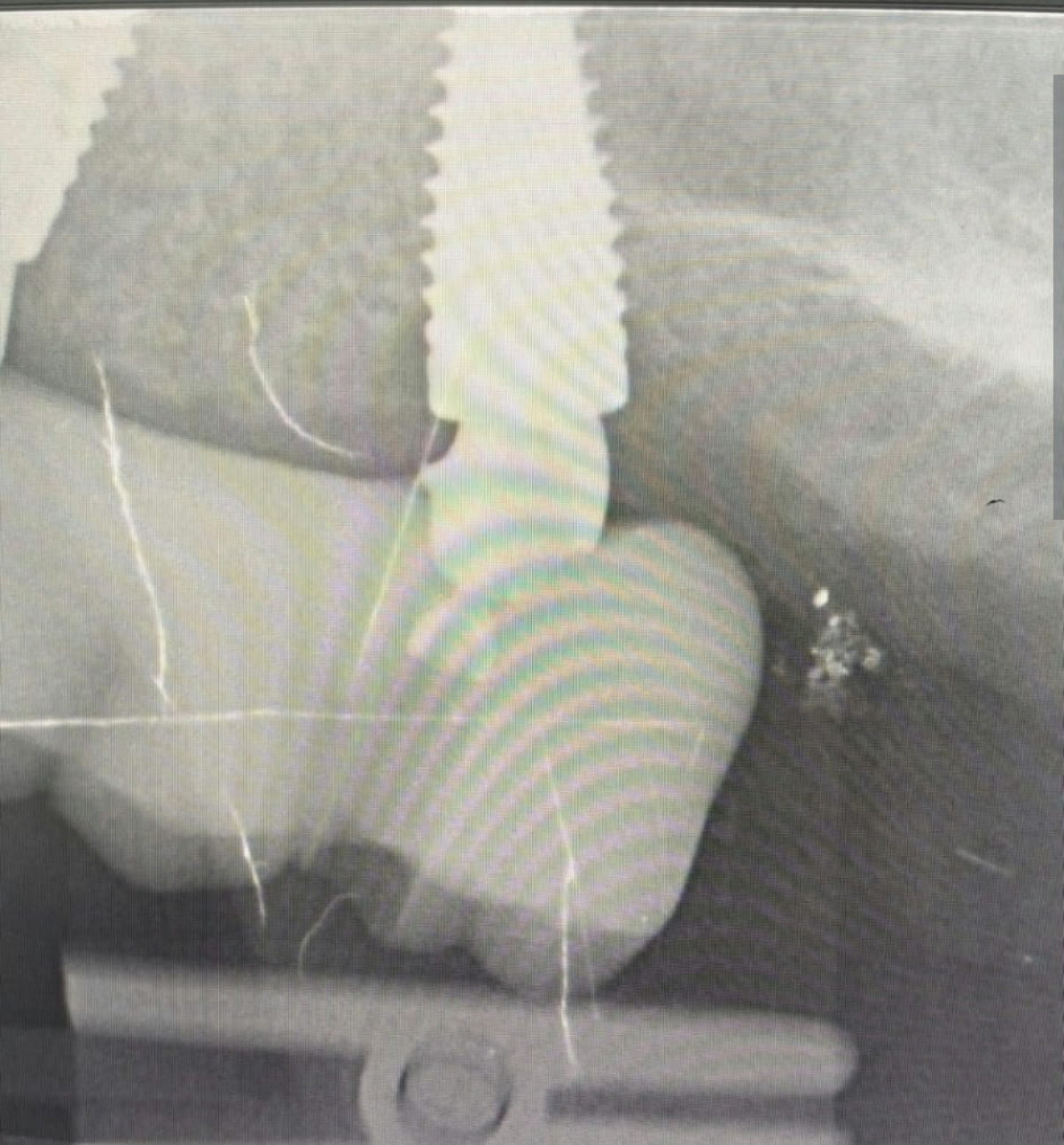
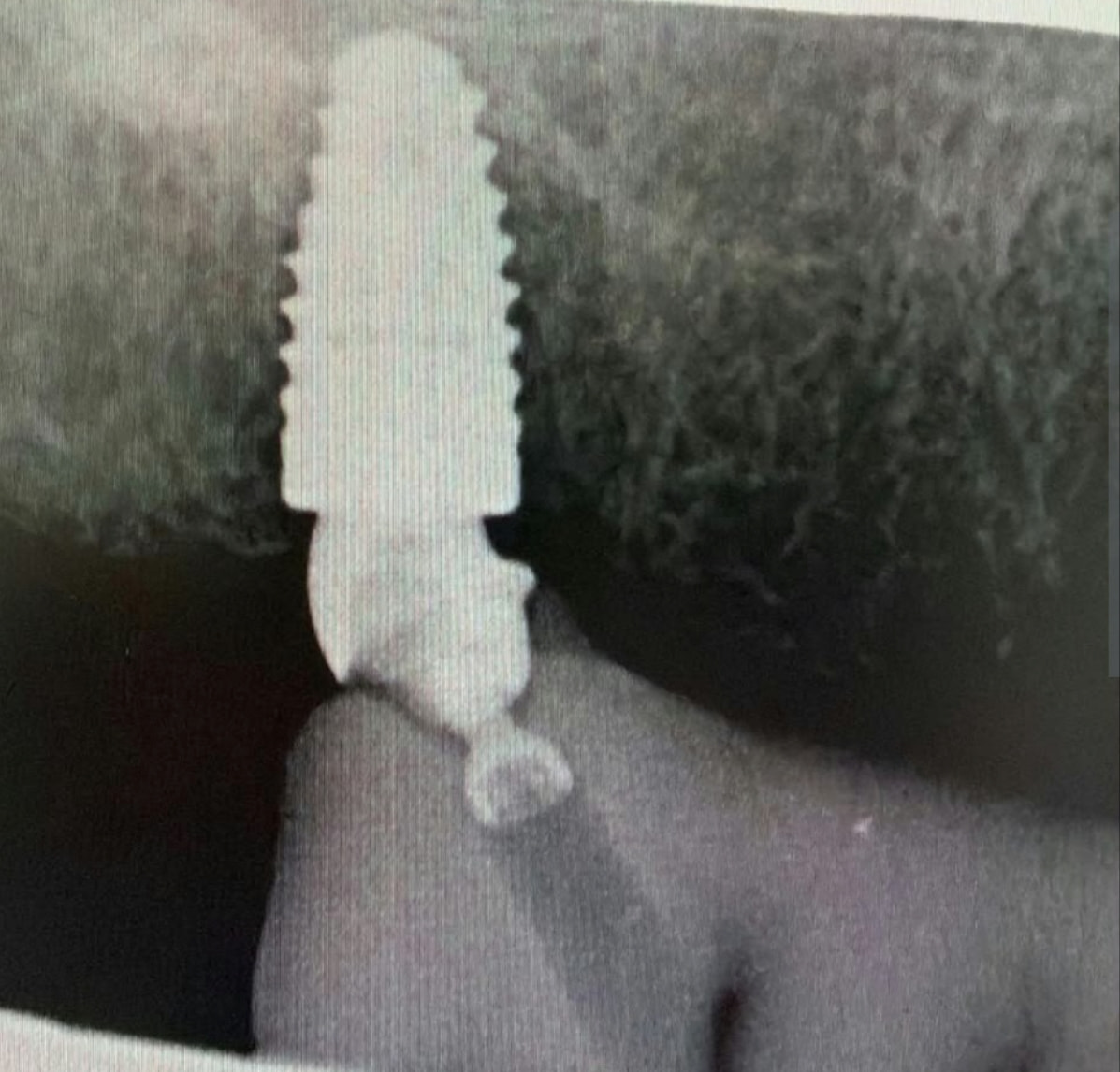
Straumann implants placed flapless submerged with cover screws and then patient wore conventional denture. 3 months later MUA placed and restored with provisional. New iopas taken show some bone loss/bone remodelling no pain or apparent implant issues at torquing MUA. Any thoughts of how to move forward ? Cbct ur6 ? Monitor with temporary bridge and dont finalize ? Interested to know why I’ve have coronal bone loss on the 16 and 26 over prepping because I was flapless/denture pressure? Any advice appreciated
TIA
If it was me- I would do the following.
Remove prosthesis.
Check implant stability- ideally ISQ.
Debride, augment and place a cover screw. Patient on Amoxyl. Submerge for 6 months.
CBCT will give you an idea of how much bone loss. but usually you have some scattering so you cant really see minimal bone loss on cbct. the best method is still probing/sounding the implant. ISQ won’t tell you condition of the bone loss around the implant. you can remove the provisional. probe/sound the implant. if there’s significant bone loss around the implant then the implant is lost. debride and graft will not work. if there’s bone loss, there’s bacteria. if there’s bacteria, there’s biofilm. the implant is contaminated. pt can be taking augmentin. you can bury the implant for 12 months. bone will not magically grow back and cover the implant.
then again. since this is a hybrid. all the implants are splinted so even with a little bone loss on a couple/few implants, the overall implant/denture should be fine.
so if when you probe around the implant, and you can feel the deeper threads. then that implant is done. the cause of it most likely due to occlusal forces. parafunction forces. bruxing. or when you place the implant your buccal/palatal ridge is just not thick enough. IOPAs can only gauge mesial distal bone. which is usually not the problem. insufficient bone is always buccal/lingual or buccal/palatal dimensions.
i dont think your surgical technique is at fault. although one can argue. being flapless perhaps saline could not cool the bone during drilling. and overheating bone can cause necrosis.
most of my implant failures has to do w/ inadequate/insufficient bone width buccal/palatal or buccal/lingual dimensions.
i just lost 2 implants today. i placed 4 implants in maxilla for a planned upper overdenture. the 2 posterior implants are solid. no bone loss. but 2 anterior implants developed sinus tracts 4 months post placement. which was super weird. i was about to do 2nd stage today. but end up removing 2 anterior implants and replacing 2 on solid bone i was able to find. the 2 implants that were lost just had thin ridge. only think i can tell is just insufficient quality/quantity bone.
anyway good luck dr.
Hi Dr,
Thank you for your thorough input.
With all due respect to the initial responder I also agree burying and grafting is unlikely to solve things; however when we talk about bone loss could one argue in this case it is not to do with bacterial infiltration and does that amend the treatment approach ? What if the bone loss is because of the denture mucosa trauma/placement, is it possible it may just be self limiting ?
The implants are placed 1-2mm subcrestal with thick mucosa and with the MUAs in place I was also trying to figure out how to probe ? I think I will keep the patient in provisionals for 3 months to see if this splinting effect will aid in bone ossification ?
bone loss can be due to many different reasons. I didn’t say bacterial infiltration. but once there’s bone loss on implants there will be biofilm on exposed implant threads/surfaces. It can be self limiting. usually a common bone loss is “saucerization”, which is a ring of bevelled bone loss circumferencial around the platform of the implant. Even if your bone loss isn’t due to bacterial infiltration/contamination/colonization, the treatment approach doesn’t change.
i do hope the bone loss is self limiting.
to probe the implant you will remove the provisional, numb the patient or not, then walk the probe around the implant and see how far you can touch bone. If your implants are indeed subcrestal. then you should be able to just feel bone and implant platform. If you lost bone, you will feel the threads and deep pockets around the implant. On your most distal implants, you most liklely will be able to feel the threads of the implant.
the provisional might aid in implant/bone integration but will not have an effect on bone resorption.
also if you’re not using OEM connections (eg MUA). micromovements at the platform can cause implantitis and bone loss as well.
Why I think I suggested this- is because what is the consequence if you lose the implant plan?
Redo the bridge?
Can the restoration survive without that particular implant?
Ah. I see I didn’t read properly. Patient is in a temp. And not final.
In this case I would definitely replace this implant.